

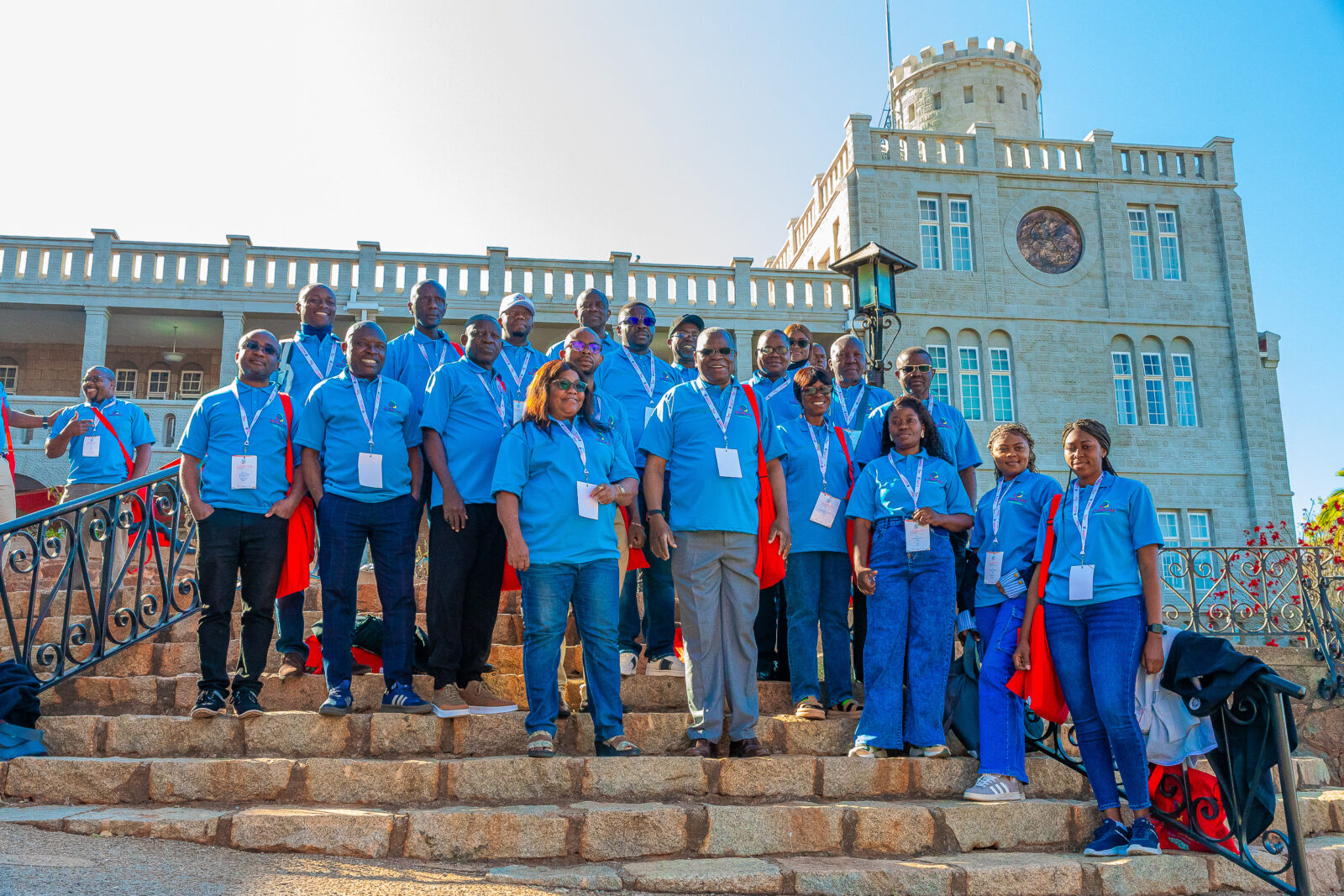
Reflections from the JASBEAM Colloquium 2025 | St George’s College, Harare | 17–22 August 2025
Introduction
The halls of St George’s College in Harare, Zimbabwe, resonated with hope, dialogue, and renewed commitment as the Jesuit Association of Secondary and Basic Education in Africa and Madagascar (JASBEAM) held its much-anticipated second colloquium from 17–22 August 2025.
Gathered under the theme “Committed to Networking at the Service of the Mission to Educate for Faith in the 21st Century,” the event brought together 160 educators, administrators, and Jesuit leaders from 22 nations across Africa and Madagascar. Presenters came from Zimbabwe, Zambia, Kenya, the Democratic Republic of Congo, Ireland, the United States, and the Vatican.
Building on the foundation of the inaugural JASBEAM Colloquium in Abuja, Nigeria, in 2022, participants engaged in spirited dialogue and collaborative reflection on the transformative mission of Jesuit education in a rapidly changing era.
Keynote Addresses
Archbishop Robert Christopher Ndlovu of Harare opened the colloquium with prayer and blessing, before addressing the urgent challenges facing educators: digital disruption, secularization, misinformation, and cultural decline. He urged Jesuit schools to remain anchored in faith, forming holistic individuals guided by Ignatian principles such as cura personalis (care for the whole person), discernment, empathy, and social justice. Educators, he reminded, are “co-workers in the vineyard of the Lord.”
Fr Leonard Chiti SJ, Provincial of the Jesuits in Southern Africa, traced the rich legacy of St George’s College—founded in 1896 and relocated to Harare in 1927—calling it a living testament to Jesuit commitment to education. He reminded participants of their mission to shape people of conscience, compassion, competence, and commitment,particularly in societies marked by corruption, injustice, and inequality.
Fr José Minaku SJ, President of the Jesuit Conference of Africa and Madagascar (JCAM), challenged participants to see Africa’s struggles as opportunities for renewal. He urged educators to embrace creativity, deepen collaboration, and avoid complacency. His message was clear: “Together we can achieve what none of us can achieve alone.”
Fr José Mesa SJ, Secretary for Jesuit Education, described the colloquium as a milestone for Jesuit education in Africa and Madagascar. He emphasized networking, discernment, and the importance of offering a collective witness to the world: that Jesuit education continues to form people of faith, resilience, and hope.
Representing Zimbabwe’s Ministry of Education, Mr Mupunza affirmed the importance of faith-driven, collaborative approaches in education, reminding all that true formation touches both intellect and character.
Together, these voices set the tone for days of prayer, dialogue, and deep reflection on the Jesuit mission in today’s world.
Colloquium Sessions and Highlights
Presenters from Africa, Europe, and the United States addressed the many dimensions of Jesuit and Catholic education today. Their insights were organized into ten thematic categories:
- Overview of Jesuit/Catholic Education: Fr José Mesa SJ urged schools to face today’s “change of era” with courage and creativity, while remaining rooted in Ignatian tradition.
- Educate Magis and Global Collaboration: Mr. Dave Smith and Ms. Ciara Beuster showcased Educate Magis as a global platform for Jesuit schools, fostering community, resource-sharing, and formation.
- Mission and Identity through Networking: Fr Robert Reiser SJ reminded schools to discern how global Jesuit values can be lived authentically in local contexts, transforming colleagueship into kinship.
- The Needs of Africa and Madagascar: Dr David Kaulem challenged Catholic schools to resist market-driven models, calling them instead to nurture students spiritually and morally in pluralistic societies.
- Safeguarding and Protection: Fr John Guiney SJ and Dr Sandra Raciobero-Plaza presented the PCCP program, which empowers schools to promote dignity, prevent abuse, and support those who speak out.
- Forming Leaders for Africa: Ms. Rachel Adams urged educators to inspire confidence, resilience, and lifelong learning in young people, preparing them to lead Africa with vision and humility.
- Jesuit and Catholic Identity: Fr Augustine Kalubi SJ grounded his presentation in Gravissimum Educationis, calling Jesuit schools to embed Christ at their center and to cultivate Ignatian practices like retreats and days of reflection.
- Jesuit Education at the Margins: Fr Dani Villanueva SJ emphasized education as a pathway to justice, particularly for marginalized communities facing conflict, poverty, and exclusion.
- Global Citizenship (“GLOCAL” Education): Ms. Catharine Steffens and Ms. Lynette Ndlovu shared a framework piloted in JASBEAM schools that helps students address local issues through global perspectives.
- Case Study – St George’s College: Mrs. Alison Stangroom showed how Ignatian values can permeate a school’s curriculum, culture, and daily life, ensuring Jesuit identity is lived, not just taught.
Ignatian Conversations and Spiritual Reflection
Beyond presentations, the colloquium was marked by prayer, discernment, and dialogue. Each day included spiritual conversations and Mass (celebrated in French and English), grounding the gathering in shared faith.
On the final day, schools exchanged gifts, symbolizing solidarity across nations. Fr Joe Arimoso SJ formally handed over the role of JASBEAM Coordinator to Fr Chikere Ugwuanyi SJ, ensuring continuity of leadership and mission.
Conclusion: A Hope-Filled Future
The JASBEAM Colloquium 2025 was more than a conference—it was a moment of communion and renewal. Participants left with a deepened sense of mission: to form young people of faith, conscience, competence, compassion, and commitment to justice.
In a world shaped by uncertainty and rapid change, Jesuit education reaffirms its core identity: not simply imparting knowledge, but forming whole persons—leaders who can serve, transform, and inspire.
The seeds planted here will bear fruit in classrooms, communities, and societies for generations to come.
By ~Lynette Ndlovu

 English