

There is a quiet but radical movement taking shape within the Catholic Church in Zimbabwe, and, fittingly, it begins with water.
As the global Church enters the Season of Creation, observed from 1 September, the World Day of Prayer for the Care of Creation, to 4 October, the Feast of St Francis of Assisi, young Catholics in Zimbabwe are refusing to allow this sacred season to become merely another entry on the liturgical calendar.
Through a partnership between the Catholic Youth Network for Environmental & Sustainability in Africa (CYNESA) and the Jesuit Youth Office of Southern Africa, young people are being invited to move beyond reflection and into action through the 2026 Season of Creation Programme.
At the heart of the programme is a theme that speaks directly to the realities confronting Zimbabwe: “Water, Justice and Hope: Rivers of Justice, Streams of Hope.”
For a country where Lake Chivero has struggled under the weight of pollution, where communities continue to experience water shortages, and where water rationing has become familiar to many households in Harare, the theme carries more than environmental significance. It is deeply spiritual.
It calls to mind the Ignatian invitation to find God in all things — even in a dry tap, a polluted river or a community waiting for clean water.
From Contemplation to Action
The programme does not begin with a shovel, a tree seedling or a clean-up campaign. It begins with formation.
On 3 September 2026 at 19:30, young people and people of goodwill will gather virtually for the online webinar, “Water, Justice and Hope: Understanding the Season of Creation 2026.”
The invitation is deliberately broad. It reaches beyond denominational boundaries, recognising that care for our common home is a responsibility shared by all.
The webinar will offer an introduction to the 2026 Season of Creation theme, exploring the relationship between faith, water, ecological justice and hope, while challenging young people to become agents of ecological transformation.
This is recognisably Ignatian: to see, to discern, and then to act.
Before reaching for the broom, the programme invites young people to ask deeper questions. Why are our waterways polluted? Who suffers most when clean water becomes scarce? What are our responsibilities as Christians? And what does the Gospel ask of us in the face of ecological injustice?
Only then does contemplation become action.
A clean-up campaign, for example, is about far more than removing rubbish. In communities where uncollected waste blocks drainage systems and contributes to public-health risks, cleaning a market or waterway becomes an act of solidarity. It becomes a practical expression of the commandment to love one’s neighbour.
As Pope Francis reminded the Church, caring for creation is inseparable from Christian discipleship.
Forming Consciences, Planting Futures
The Jesuit character of the programme becomes particularly visible in the way formation and action are woven together.
On 13 September, a Formation Day on Ecology for Parish Youth Ministry will provide young people with an opportunity to deepen their understanding of ecological responsibility.
The purpose is not simply to impart information, but to equip young people with the knowledge, values and practical skills needed to care for our common home.
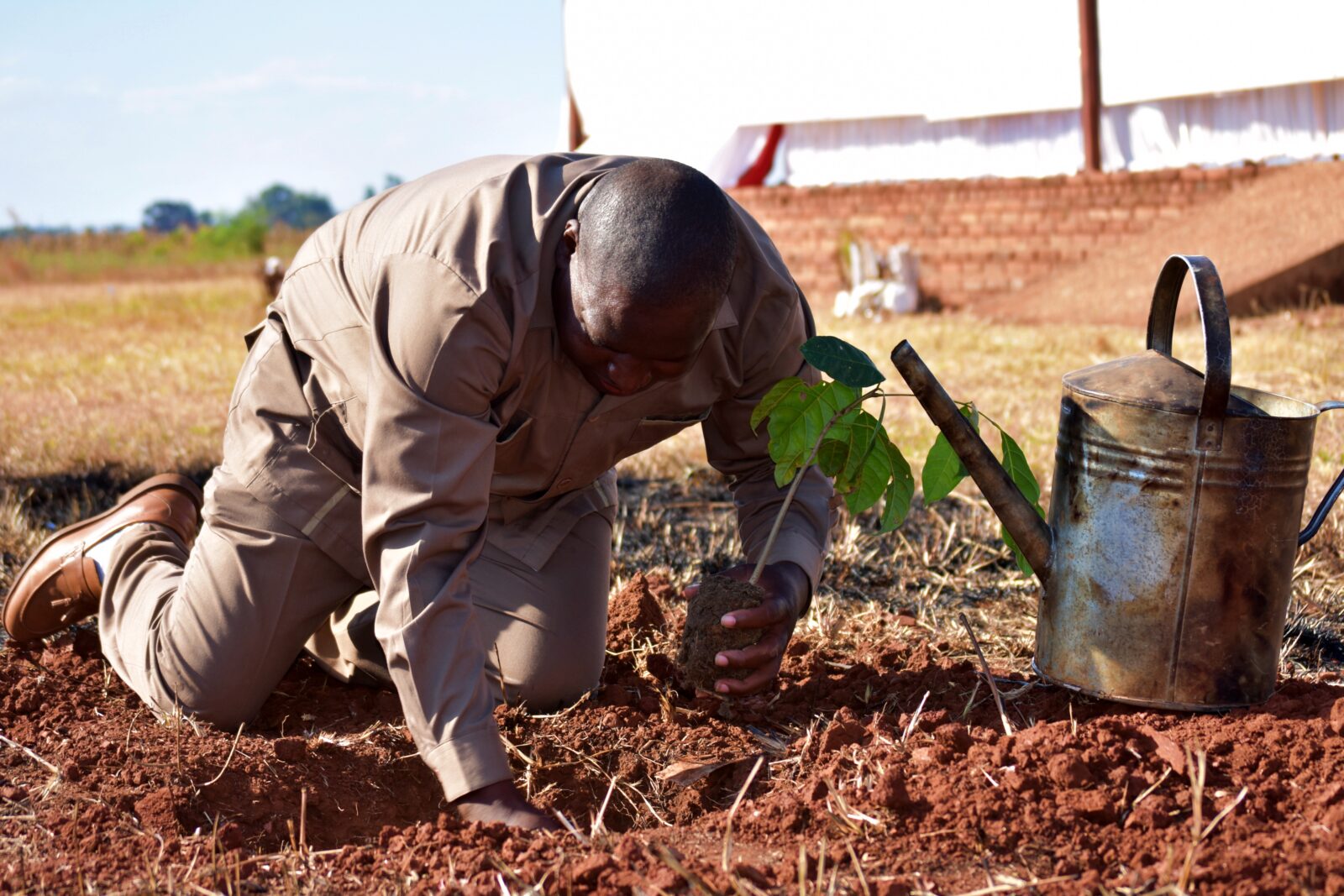
Then, on 19 September, formation will take root, quite literally at Silveira House, where young people will gather for a Tree Planting and Day of Service.
They will plant trees, care for the environment and serve the surrounding community.
There is something particularly significant about planting trees at Silveira House, a place deeply associated with the Jesuit commitment to justice and the empowerment of communities on the margins. Here, ecological action becomes part of a broader vocation to reconciliation.Reconciliation with God, with one another and with creation.
The protection of our common home is also central to the Society of Jesus’ commitment to responding to the signs of the times and to the ecological dimension of its mission.
When Water Becomes a Question of Justice
The intellectual heart of the Season of Creation programme comes on 25 September, with the KUJZ/AJU Public Lecture, themed:
“Rivers of Justice, Streams of Hope: Water, Ecological Justice and the Future of Zimbabwe.”
The conversation brings together a broad Catholic audience, including members of the National Movement of Catholic Students, the Catholic Professionals Network of Zimbabwe and the Zimbabwe Catholic Bishops’ Conference.
Here, water moves beyond being simply an environmental concern. It becomes a question of justice.
Who has access to clean water? Who bears the consequences when rivers are polluted? Who makes decisions about the use of water resources? And how can communities build hope when the very ecosystems on which they depend are under pressure?
These are not merely technical questions. They are also moral and spiritual questions.
The vision of Laudato Si’ reminds the Church that ecological concerns cannot be separated from human dignity, poverty, justice and the common good. Environmental degradation does not affect everyone equally. Those with fewer resources are often among those most exposed to its consequences.
The public lecture therefore creates space for young people and the wider Catholic community to engage these questions with faith, reason and a commitment to the common good.
From the Streets to the Altar
The programme returns once again to practical action.
On 2 October, from 08:00 to 10:00, a second clean-up campaign will take place at OK Marimba Shops, led by students from Harare Institute of Technology (HIT) and Belvedere Technical Teachers College.
The initiative broadens participation beyond the traditional boundaries of parish life, demonstrating that care for creation belongs wherever people live, study, work and worship.
Then, on 3 October, on the eve of the Feast of St Francis of Assisi, the Ignatian Youth Network will host a Green Mass.
Its purpose is simple yet profound: to bring together prayer, the Eucharist and care for creation, giving the community an opportunity to reflect on its Christian responsibility to protect and restore our common home while giving thanks for the gift of creation.
This is not merely a symbolic gesture.
The Eucharist itself reminds Christians of the material nature of creation. Bread comes from the earth. Wine comes from the fruit of the vine. Water is essential to life and is central to the sacramental journey of Christian initiation.
To celebrate the Eucharist while reflecting on the wounds inflicted upon creation is to remember that Christian faith does not exist apart from the world God has entrusted to humanity.
A Pilgrimage of Faith and Ecology
What CYNESA and the Jesuit Youth Office have crafted is therefore more than a calendar of activities.
It is a pilgrimage.
It begins with the mind through the webinar.
It moves to the hands through community clean-up activities.
It deepens in the heart through formation.
It reaches the soil through tree planting at Silveira House.
It enters the public square through the conversation on water justice.
And finally, it returns to the altar through the Green Mass.
In many ways, it resembles an ecological Ignatian Examen: giving thanks for the gift of creation, examining how humanity has treated that gift, recognising the wounds we have caused, seeking conversion, and committing ourselves to a different way of living.
At a time when many young Zimbabweans confront enormous social, economic and environmental challenges, the programme offers something deeply important: the possibility of agency rooted in faith.
It reminds young people that they do not have to wait for someone else to begin.
They can organise.
They can learn.
They can clean their communities.
They can plant trees.
They can engage public institutions.
They can ask difficult questions about water and justice.
And they can bring all of these concerns to the Eucharistic table.
This is perhaps the most powerful message of the Season of Creation: that faith is not something we leave behind when we step outside the church.
Faith flows into our streets, our rivers, our schools, our parishes and our communities.
And water, after all, is where many Christians first encountered the sacramental life of the Church, through baptism.
For a generation of young Zimbabweans, perhaps water can become something more: not only a symbol of the life we have received, but a call to protect the life we share.
Where there are rivers in need of justice, may there be people willing to act. Where there are dry places, may hope begin to flow. And where creation is wounded, may faith become a source of healing.
By Tadiwa Madava

 English