

Years of Priestly Formation
From a Jesuit Mission Farm to Zimbabwe’s National Seminary
CHISHAWASHA, 25 KM EAST OF HARARE —
For nine decades, Chishawasha has played a central role in the preparation of Catholic priests in Zimbabwe. What began on a large farm acquired by Jesuit missionary Father Francis Richartz, SJ, in 1892 has developed into the country’s national seminary and an important centre for priestly formation.
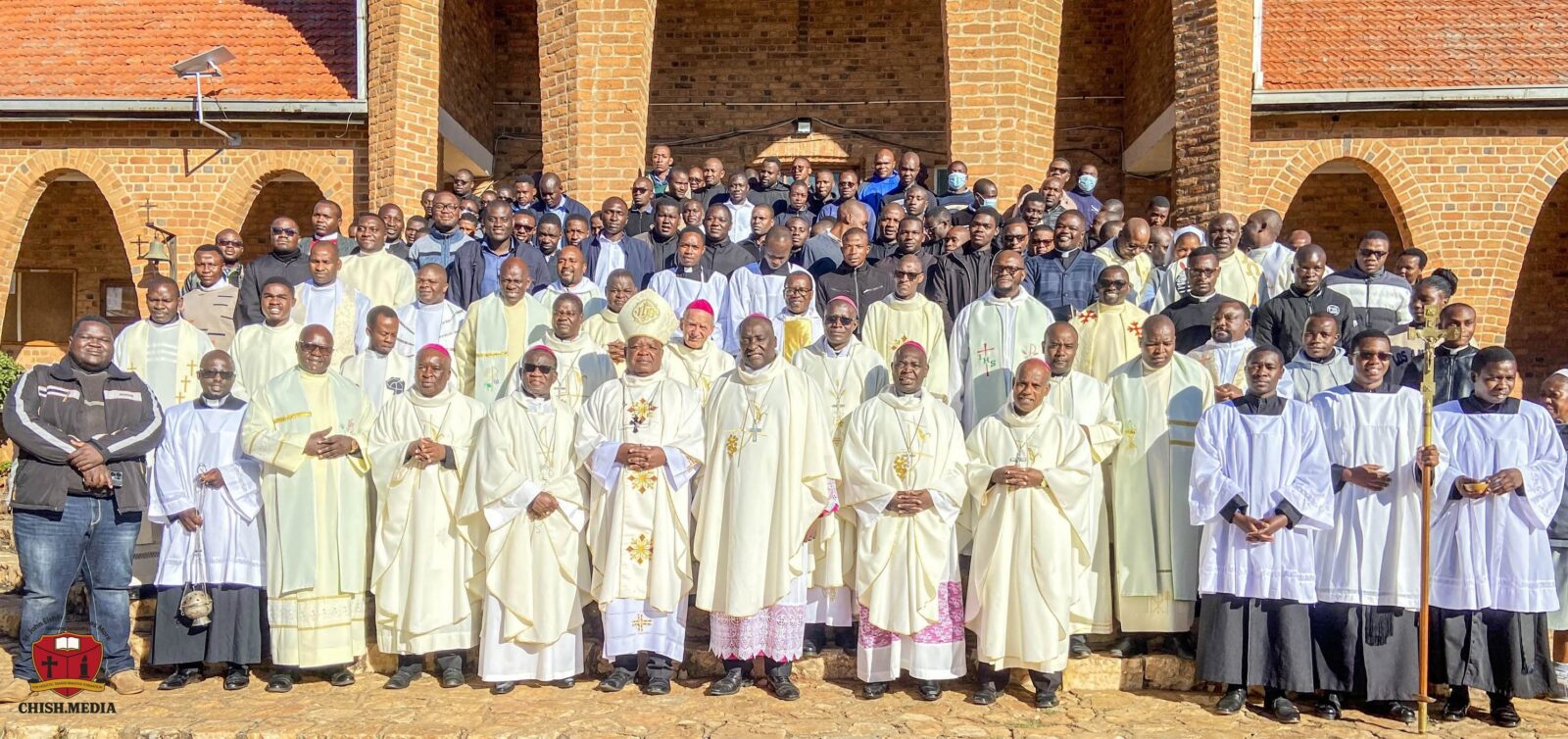
In 2026, Ss John Fisher and Thomas More National Seminary commemorates 90 years since its establishment in 1936 under Archbishop Aston Chichester, SJ. Today, the institution is owned and administered by the Zimbabwe Catholic Bishops’ Conference (ZCBC). It can accommodate more than 200 students and serves as the national centre for the formation of diocesan clergy for Catholic dioceses across Zimbabwe. The anniversary provides an opportunity to look back at the institution’s history while considering the purpose that continues to guide its work: preparing priests who can serve the Church effectively in the realities of contemporary Zimbabwe.
A MISSION FARM WITH A LASTING LEGACY
The story of Chishawasha National Seminary is closely connected to the history of Chishawasha Mission. Father Francis Richartz established the mission in 1892 on a sizeable farm. As the first Jesuit mission in what was then Southern Rhodesia, Chishawasha developed around agriculture, education and practical skills. Richartz believed that a mission needed to be able to sustain itself while remaining closely connected to the people and land around it.
For more than four decades, the site functioned as a mission farm, school and centre for various trades. A significant change came in 1936 when Archbishop Aston Chichester, SJ, the first Catholic Archbishop of Salisbury, established a national seminary on the mission grounds.
The decision reflected a growing need for the Catholic Church to prepare African clergy locally rather than depending primarily on foreign missionaries. The new seminary was dedicated to Saints John Fisher and Thomas More, English Catholic martyrs remembered for their commitment to conscience and faith.
Over the years, the seminary has educated generations of priests who have served communities throughout Zimbabwe. Its development also reflects the wider transition of the local Catholic Church from missionary administration towards stronger local leadership. After many years of Jesuit administration, the institution eventually came under the ownership and management of the ZCBC, representing Zimbabwe’s Catholic Bishops.
FORMATION FOR THE PRIEST OF TODAY
The seminary’s work is guided by a holistic approach to priestly formation. Its mission is centred on pastoral, intellectual, human and spiritual development, with the aim of preparing priests to become competent and selfless servants of Christ in the contemporary world.
Its vision is to function as a competent national seminary dedicated to forming local clergy for the mission of the local Church. These principles influence both academic study and daily life at the institution. Pastoral formation extends beyond formal lessons, giving seminarians opportunities to engage with communities and pastoral settings, including nearby villages and hospitals in Harare.
Intellectual formation covers areas such as philosophy and theology while also engaging with subjects that speak to present-day African and Zimbabwean realities. Human formation focuses on maturity, responsibility, relationships and service, while spiritual formation remains central to the entire process.
The challenges facing today’s Church are different from those of 1936. Migration, unemployment among young people, social change and environmental pressures all affect the communities in which future priests will minister. Consequently, formation must equip seminarians not only with theological knowledge but also with the practical
and pastoral skills required to understand and accompany people in these circumstances.
NINETY YEARS THROUGH A CHANGING COUNTRY
The history of the seminary has unfolded alongside major changes in Zimbabwe’s history. Established during the colonial period, it continued its work through the Federation era, the period of Unilateral Declaration of Independence and the liberation struggle.
The disruptions of the war years affected many aspects of life, including the number of priestly vocations. Following Zimbabwe’s independence in 1980, however, the local Catholic Church expanded and the seminary experienced increased numbers of vocations.
The physical environment of Chishawasha also preserves traces of its past. Some of the original brick buildings remain, including structures made from bricks produced from local soil. Additional facilities were constructed as the number of students grew, eventually allowing the institution to accommodate more than 200 seminarians.
Today, the seminary functions almost like a small community, with facilities that include a chapel, library, dining areas, accommodation and recreational spaces. Its location outside Harare has also remained significant. Being sufficiently removed from the city provides an environment conducive to prayer, reflection and discernment, while its proximity to the capital keeps seminarians connected to an important centre of pastoral and social activity.
THE SIGNIFICANCE OF THE 90TH ANNIVERSARY
For the Zimbabwe Catholic Bishops’ Conference, the 90th anniversary is an occasion to celebrate the contribution Chishawasha has made to the local Church while also considering what is required for the institution’s future.
Over the past 90 years, the seminary has helped strengthen the presence of locally trained clergy and has contributed to the development of Zimbabwe’s Catholic leadership. Its long history, however, also brings the responsibility of renewal. An institution that has served the Church for nine decades must continue adapting its facilities, programmes and formation methods to meet the needs of a changing society.
The central purpose remains consistent. From the agricultural mission established by Father Francis Richartz in 1892 to the national seminary established by Archbishop Chichester in 1936, Chishawasha has been associated with preparing people for service to the Church.
Now under the ownership of Zimbabwe’s Catholic bishops, the seminary continues that responsibility as a national institution. Its story is one of continuity and adaptation: a former Jesuit mission that grew into a centre for local priestly formation while retaining a universal Catholic purpose.
As the seminary marks its 90th year, its legacy can be understood through the generations of priests formed there and the communities they have gone on to serve. The work continues quietly at Chishawasha, with each new generation of seminarians preparing for a life of faith, service and pastoral responsibility.
 English