

The Jesuit Centre for Theological Reflection (JCTR) in Zambia has its roots in a Jesuit vision of bringing faith into closer engagement with the social, economic and political realities facing ordinary people.
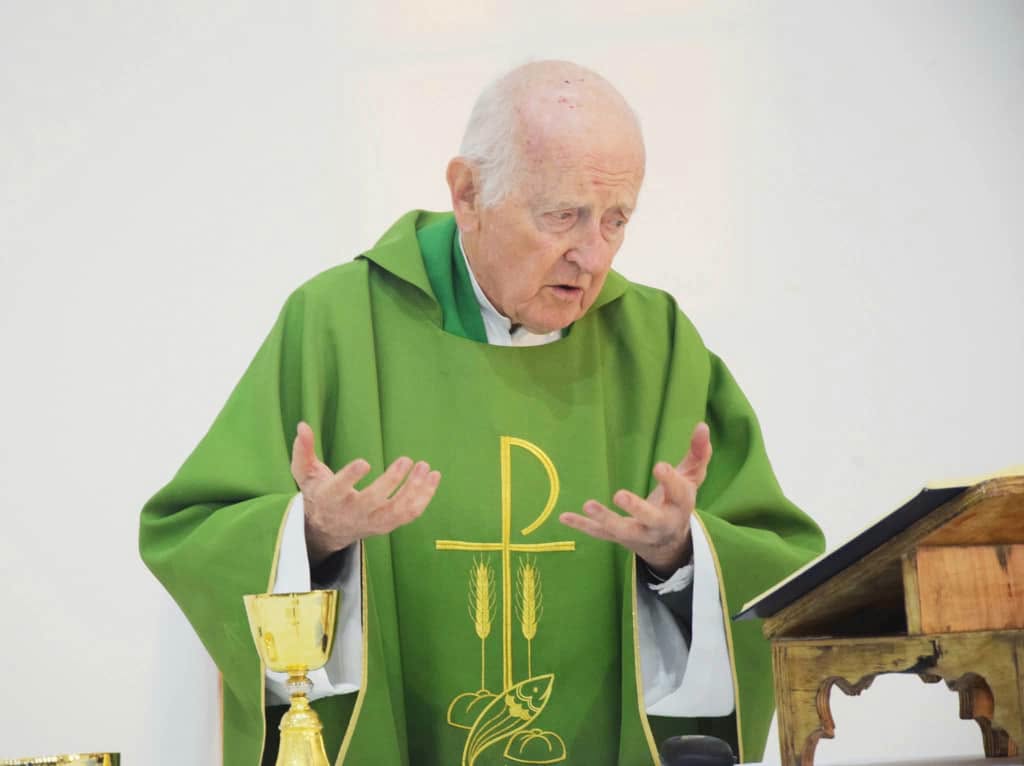
At the centre of this history is the late Fr. Peter Henriot, SJ, who became the Centre’s long-serving Director and played a significant role in shaping its mission of research, education and advocacy for social justice.
The idea of establishing JCTR emerged from a Jesuit Province Assembly held in Lusaka towards the end of the 1980s, where Jesuits recommended the creation of a social centre that would study social issues from a theological perspective and contribute to the promotion of a more just society.
The initiative reflected the call of the 32nd General Congregation of the Society of Jesus in 1975 for “the promotion of a faith that does justice.” The proposed centre was intended to provide a space where faith, theological reflection and social analysis could inform the Church’s response to the challenges confronting Zambian society.
Fr. Arun Varaprasadam, SJ, an Indian Jesuit from the Madurai Province who was then working in Zambia, was appointed to begin the process of establishing the centre. Known as Fr. Vara, he visited Jesuit communities and began conversations on the social issues that could form the basis of its work.
After about a year, however, Fr. Vara was called by his Provincial to a new mission in La Réunion.
It was at this point that Fr. Peter Henriot, SJ, emerged as a key figure in the establishment of the Centre.
Fr. Henriot had come to Zambia in 1988 for a sabbatical after years of working on social justice issues in the United States, including at the Center of Concern, where he later served as director.
During his sabbatical in Zambia, he worked with the Development Office of the Diocese of Monze under the direction of Fr. Fred Moriarity, SJ. His work with rural communities brought him into direct contact with the social and economic realities experienced by people in the country.
When Fr. Vara was called to his new mission, the Provincial approached Fr. Henriot and asked him to consider remaining in Zambia to establish the proposed social centre.
After prayer and reflection, Fr. Henriot accepted the mission.
The Zambia – Malawi Provincial subsequently sought permission from Fr. Henriot’s Provincial in Oregon for him to remain in Zambia. Permission was granted and, following a brief return to the United States, Fr. Henriot returned to Lusaka to establish and direct what became the Jesuit Centre for Theological Reflection.
In 1992, he formally transferred from the Oregon Province to the Zambia-Malawi Province, marking a further commitment to the mission he had undertaken in Zambia.
The beginnings of JCTR were modest. Fr. Henriot often recalled that the Centre started with little more than “a few books on the bookshelf” in his room at Matero Parish in Lusaka, Zambia.
From that small beginning, JCTR developed a mission to assist the local Church and other groups to address economic, political and social justice concerns through research, education, advocacy and consultation.
As its work expanded, so did its physical presence. In 1991, JCTR moved into an office in an extension of St Ignatius Parish. Further facilities were later developed around Luwisha House, including a resource centre, conference room and offices.
In 2010, JCTR acquired and remodelled its present premises on Martin Mwamba Road, creating space for offices, a library, conference facilities and reception areas.
One of JCTR’s earliest and most recognised initiatives was the Food Basket, a monthly survey that tracked the cost of basic food items for a family of six in Lusaka.
The initiative was later expanded into the Basic Needs Basket, incorporating other essential goods and services required by households. The survey was subsequently extended to other towns and regions of Zambia.
The Basket became a reference point in discussions on the cost of living and wages. Trade unions used the figures in advocating for improved wages, while employers also used the information in considering remuneration. The initiative became one of JCTR’s most visible contributions to public discussions on poverty and economic justice.
JCTR and Fr. Henriot were also involved in the Jubilee 2000 campaign, which advocated for the cancellation of Zambia’s external debt. At the time, the country’s external debt was estimated at approximately US$6.8 billion, placing significant pressure on the economy and government resources.
The campaign brought together churches, civil society organisations and other stakeholders in calling for debt relief. Zambia subsequently benefited from debt relief amounting to several billion dollars from international lenders.
For JCTR, the campaign illustrated how research, public education and advocacy could be brought together to address wider structural issues affecting poor and vulnerable communities.
Fr. Henriot’s contribution extended beyond JCTR itself. He served on the boards of several organisations and advised the Zambia Episcopal Conference and Catholic justice and development structures. He contributed to discussions on poverty, development and governance and advised on pastoral letters issued by the Catholic bishops, including statements developed jointly with other Christian bodies.
His work also took him beyond Zambia. He served as an adviser and consultant to Church justice and peace structures in Africa and contributed to international conversations on Africa, development and social justice.
Fr. Henriot was also involved in formation and education. He taught at St Dominic’s Major Seminary in Lusaka and lectured on Catholic Social Teaching at Jesuit institutions in Nairobi and Harare.
The history of JCTR is therefore closely connected to the Jesuit commitment to place faith at the service of justice. What began as a proposal at a Province Assembly, followed by the initial work of Fr. Arun Varaprasadam and the commitment of Fr. Peter Henriot, gradually developed into an established centre for research, reflection and advocacy.
The journey from a few books on a bookshelf at Matero Parish to an established institution illustrates how a modest beginning can develop into a significant mission when sustained by vision, commitment and a clear purpose.
As Zambia remembers Fr. Peter Henriot following his death, the story of JCTR forms an important part of his legacy. His years of ministry in Zambia reflected the Jesuit conviction that faith must engage with the concrete realities of people’s lives and contribute to the pursuit of justice.
From a bookshelf in a Jesuit room to a national institution, the story of JCTR remains a testimony to the enduring call for a faith that does justice.
Source Jesuits Southern Africa Facebook page

 English